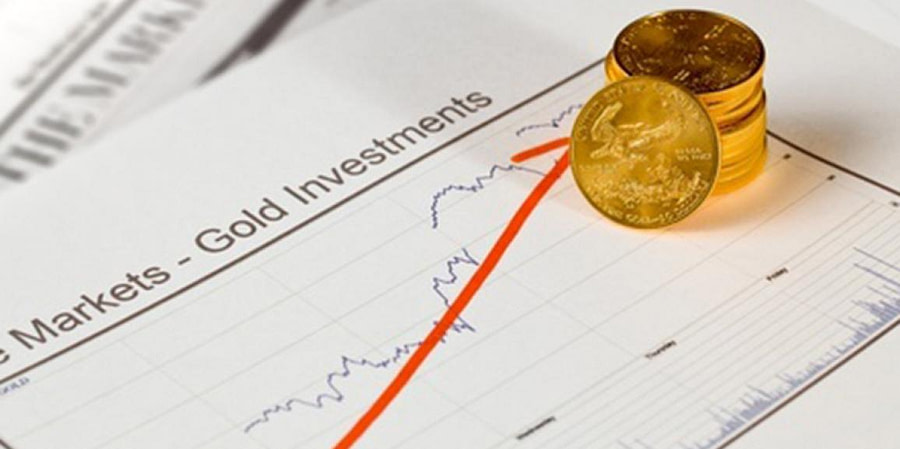
If you’ve been watching the price of gold for the last 15 years, you might have noticed a fascinating — and potentially profitable — pattern in the charts.
Since 2001, gold prices have tended to rise rapidly in the months from August to November following the slow summer months.
If you average the price of gold over the last 39 years, that same pattern is repeated almost every year. There have been exceptions, such as 2008 and 2014, but there is clearly something more than random chance driving this annual phenomenon.
Do you know what it is?
The answer is found all the way across the world: in the ancient traditions of India. Yes, this country’s historic yearly gold buying tradition is so strong that it has the power to spike gold prices virtually every year!
If you’ve been considering a gold purchase, now might be the time before the 2016 fall rush to gold begins.
INDIAN WEDDING BELLS FOR GOLD?
India has a virtually limitless appetite for gold. In 2015, demand in India for gold jewelry reached 668 tons, roughly one-third of global demand! This buying is second in size only to the Chinese market.
According to Thomson Reuters, spending on gold in India is predicted to rise 11% in 2016/2017.
Indian demand for gold is influenced by two key factors: crop revenue from the monsoon season and the number of weddings in the fourth quarter. This year, Indian is experiencing some of their best rainfall since the 1990s. After two years of drought, Indian gold consumption is expected to rise dramatically.
Much of this buying happens during the annual fall holiday of Diwali, or Festival of Lights (the Hindu equivalent to Christmas). Roughly one-third of that Indian demand for gold is from rural farmers who use it as a hedge and quasi-insurance to be sold in times of need.
India’s expected economic boon means more marriages and more generosity at those events. As WGC Aram Shishmanian recently said in a June interview: “In India, a marriage is not a marriage without gold.” The amount of gold purchased for a typical Indian wedding ranges between 20 and 2,000 grams. From now until 2021, there are 300 million Indians between the ages of 25 and 29 and roughly 150 million weddings will be held.
HISTORIC GOLD DEMAND IN 2016
Investors globally have been accumulating gold at a furious pace in 2016, driven by negative interest policies in Japan and Europe, a slowing U.S. economy and the emergence of precious metals as the currency of choice for risk-averse investors seeking safety.
In the second quarter of 2016, investors bought a total of 448.40 tons of gold: a 25% rise compared to the second quarter of 2015. For the first time on record, investment has been the largest component of gold demand for two consecutive quarters. According to the World Gold Council (WGC), demand for gold Eagle coins has jumped 84% so far this year.
This recent record-breaking investment demand for gold is not surprising when you consider the state of the world.
The Bank of America recently cut its forecast for the U.S. economic growth;
Deutsche Bank estimates there is a 60% probability that the U.S. will be in a recession next year;
We are sailing into a contentious presidential election in November;
Overseas, Japan and China are still weak and Brexit has shaken confidence in the very existence of the EU.
BEAT THE SUMMER RUSH
If you do not own gold, your portfolio is not really diversified! It is time to rethink your game plan before the fall rush to gold begins.
Gold is a proven long-term asset for almost any type of retirement investor. Gold and silver are the asset classes of choice in times of negative interest rates, geopolitical uncertainty and a sluggish global economy. Over the long term, gold has an inverse correlation to stocks, making precious metals a crucial component of effective diversification.
Central banks are trying to print money as way out of the global economy’s malaise. However, confidence in central banks and other institutions has fallen as the limits of monetary policy are realized and any promised economic growth fails to materialize.
If you want an investment that has growth potential in big markets like China and India and helps hedge the risk of a stock market plunge in the U.S., you need gold in your investment or retirement account today.